
Renovation Projects That Are NOT Worth the Money
Not all renovations add value. Discover home improvement projects that often aren’t worth the money and learn how to invest in smarter upgrades.
3/4/20262 min read
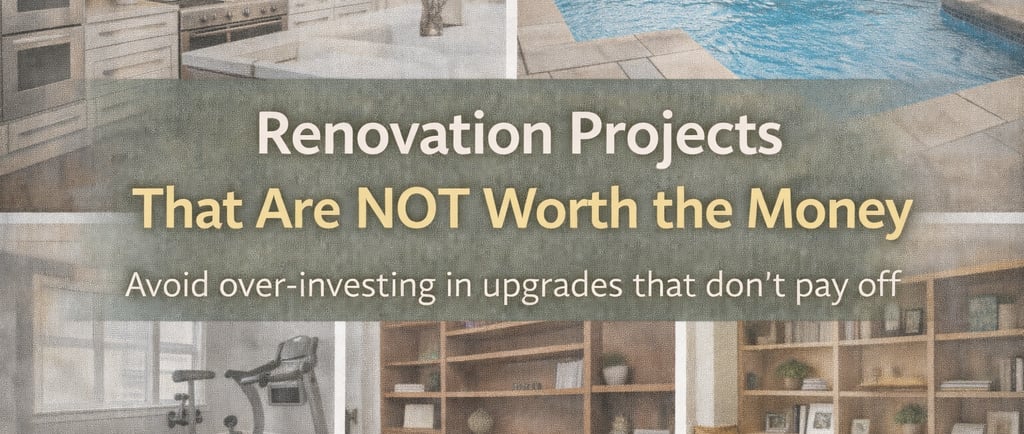
Home renovations can make your space more comfortable, stylish, and functional. But not every upgrade delivers a good return on investment.
Some renovations cost thousands but add very little value when it’s time to sell. Others may even make your home harder to market.
Before you start your next project, here are renovation upgrades that often aren’t worth the money — and why.
1️⃣ Luxury Kitchen Upgrades in Modest Homes
The kitchen is often called the heart of the home, but going too luxurious can backfire.
Examples include:
Professional-grade appliances
Imported marble countertops
Custom cabinetry far above neighborhood standards
If the surrounding homes are modest, buyers may not be willing to pay extra for ultra-premium upgrades.
Smarter approach:
Focus on mid-range improvements like cabinet paint, new hardware, and updated lighting.
2️⃣ Converting Bedrooms Into Specialty Rooms
Turning a bedroom into something highly customized can reduce your home's appeal.
Examples include:
Home gym conversions
Walk-in closets replacing bedrooms
Hobby or craft rooms
Many buyers prioritize bedroom count when choosing a home.
Smarter approach:
Keep spaces flexible so they can serve multiple purposes.
3️⃣ Expensive Landscaping With High Maintenance
A beautiful yard improves curb appeal, but extreme landscaping can become a burden.
Costly features may include:
Large water fountains
Complex garden designs
Exotic plants requiring heavy upkeep
Some buyers see these as maintenance headaches rather than benefits.
Smarter approach:
Choose simple, low-maintenance landscaping.
4️⃣ Swimming Pools (In Many Markets)
Pools can be enjoyable, but they rarely deliver full financial return.
Consider:
Installation costs can be very high
Ongoing maintenance and insurance expenses
Safety concerns for families with young children
In some markets, a pool may even limit potential buyers.
Smarter approach:
Only install a pool if you plan to enjoy it long-term.
5️⃣ Overly Trendy Design Choices
Design trends change quickly.
Features that may date a home:
Bold patterned tiles everywhere
Extremely dark wall colors
Ultra-modern finishes in traditional homes
What feels stylish today may feel outdated in just a few years.
Smarter approach:
Use timeless elements and add trends through decor.
6️⃣ Over-Customized Built-Ins
Built-in furniture can look beautiful, but overly specific designs can reduce flexibility.
Examples include:
Built-in desks for unique layouts
Oversized entertainment centers
Highly customized shelving systems
Future buyers may prefer open space for their own furniture.
Smarter approach:
Use modular or movable storage solutions.
7️⃣ Over-Improving for the Neighborhood
One of the biggest renovation mistakes is upgrading far beyond the local market.
If nearby homes are valued similarly, extremely expensive upgrades may not increase resale price enough to justify the cost.
Smarter approach:
Research neighborhood property values before investing heavily in renovations.
How to Renovate Smarter
Before starting a project, ask yourself:
✔ Will this improve daily living?
✔ Does it match the neighborhood value?
✔ Will future buyers appreciate it?
✔ Is it flexible for different lifestyles?
The best renovations balance personal enjoyment with long-term value.
Final Thoughts
Not every renovation is a good investment.
While some upgrades boost property value, others may cost more than they return. Making thoughtful choices helps you avoid unnecessary expenses and focus on improvements that truly matter.
At Fix & Flourish, we believe the smartest home upgrades aren’t always the biggest ones — they’re the ones that make sense for your space, lifestyle, and future plans.